

As much as console makers might prefer otherwise, the market has spoken — and it doesn’t seem to be asking for double the teraflops every seven years. (Yes, we know, there are dozens of you who are.) As a creative medium and as a business, where will video games go after all the strange surprises of the era of PS5 and Xbox Series X?
To find out, I sat down with Shawn Layden, the former head of PlayStation. He launched six consoles during his 32-year tenure there, and served as chairman of SIE Worldwide Studios and president and CEO of Sony Interactive Entertainment America. He left the company in 2019, ahead of the launch of PS5. He’s refreshingly direct in his assessment of the current console gaming landscape: Content is the way forward, not hardware.
“I think we’ve reached, on the console level anyway, incremental differentiation on the tech. The difference is, as we say, ‘only dogs can hear it.’ It’s beyond human comprehension for most users,” Layden tells Polygon. “To take gaming into the ubiquity of music and movies, having a game machine should be like buying a toaster.”
Throughout our conversation, Layden draws analogies between the current console space and outmoded forms of technology: Betamax, HD-DVD, and even old-timey railroads where companies owned the trains, the tracks, the ironworks, and the coal mines. At a certain point, the attempt to control every aspect of an industry can lead to diminishing returns.
“Imagine if you had to buy a Sony CD player to listen to Sony music artists? I mean, it sounds absurd, but that’s where we kind of are in gaming,” he says. “The hardware money is really juicy, and you’d be reluctant to give it up. I get that. But you can just go to a content strategy, rather than every six years fomenting around how much ray tracing and what does 200 frames per cycle look like — and just try to create.”
Layden believes Microsoft is having its “come to Jesus” moment right now, likening it to Sega’s departure from the console space after the launch of Dreamcast. If Microsoft does eventually stop making Xbox consoles in the next few years, he speculates, “Maybe that’s when PlayStation gets a consortium of industry leaders together and removes the burden of having to do all the hardware themselves. If you can get a consensus around what a standardization of that format would be, can you let Panasonic make game machines based on that format? Can you let Phillips make game machines based on that format, and try to make your money off the software?”
We’re already starting to see moves in this direction, with more Xbox and PlayStation games coming to Windows PC, Microsoft’s ROG Ally X handheld, and Valve’s new Steam Machine launching in 2026. But expanded options on the hardware front don’t change the fact that AAA games have become extraordinarily expensive and time-consuming to make. Over the last several years, we’ve seen Sony and Microsoft go from releasing several blockbuster first-party games each year to just one or two. The cost of making these games can run into the hundreds of millions, with Grand Theft Auto 6’s development costs allegedly topping $1 billion. And a major reason for all those ballooning budgets is the pursuit of hyperrealistic graphics.

“We have to go back and think: What do I need to make a game? Is hyperrealism something I should chase? It is really expensive. It’s expensive on your system for the resources that it eats up, and it’s expensive for the people you have to get to do it. And Mario never suffered by not being hyperrealistic,” Layden says.
The games industry finds itself in a similar predicament to Hollywood: there’s the big, bankable blockbusters, the micro-budget indies… and very little in the middle. Looking to movies like Godzilla Minus One and the animated Oscar-darling Flow as examples, Layden contends that publishers and developers need to focus more attention on the AA space.
“Let’s be more intentional in the kind of games you’re crafting, stories you want to tell, and make it tight. Don’t worry too much about the uncanny valley, because I think we’ve shown that you can’t traverse the uncanny valley. You just get really close. It’s always half the distance to the goal line. So let’s make better choices about how we design our games, so we can get them to market faster: in two to three years, not seven to 10 years,” he says.
The independent scene may be more vibrant than ever, but with thousands of games debuting each month across consoles and PC, discoverability remains a major issue for both players and creators. Like many of us, Layden looks back fondly on the eclectic mix of games that typified the PS1 and PS2 eras, when budgets weren’t nearly as high.
“We’ve really lost variety. We’ve lost the dynamic range of what gaming used to be, where you could have Metal Gear Solid on one hand and PaRappa the Rapper on the other hand, all happening at the same time,” he says. “When you have game budgets that go into triple-digit millions, which AAA does now for most publishers, risk tolerance goes to zero.”
With the explosion of popularity in open-world and sandbox games over the last decade or so, the all-you-can-eat buffet often seems like the safer bet compared to the curated and bespoke. In game reviews, the word “linear” is often deployed as a pejorative, signaling a plodding, predictable experience with little freedom for the player. But, as we’ve all discovered the hard way, not every game can be Breath of the Wild.
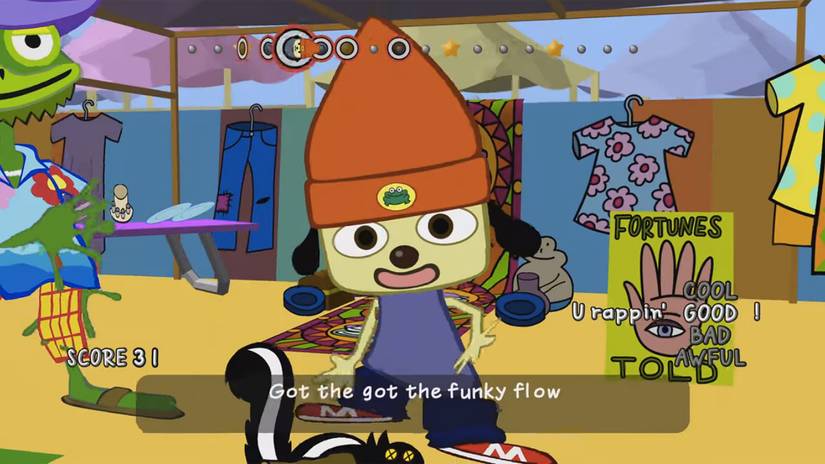
“Back in the day, the average age of gamers was 18 to 24, where you have time but you don’t have money. Now the average age of gamers is in the thirties, and while we may not be money-rich, we’re definitely time-poor. And so that kind of changed the dynamic around that,” Layden says. “If it’s a 60-hour game, let’s be honest, is this 60 quality hours? Was that an edifying activity for you, doing all these side quests, which had nothing to do with the story?”
If you remember being able to blow through a new game in a single weekend when you were younger, you’re not imagining things: There’s a business reason behind games becoming more bloated over time. Back when people still rented games in the PS1 and PS2 era, developers padded them with additional content, so there was an incentive to buy the full game. “That probably gave us a few bad habits around game design,” Layden concedes.
The idea that more hours equals better value remains a persistent notion among both creators and consumers. But are longer, more open-ended games actually giving players more satisfying experiences? Layden has his doubts.
“Now, everyone wants to say that in our game you can open every door, you can go up every staircase, you can climb through windows. If you see this mountain over there, you can walk to that mountain. We’ll procedurally generate geometry that gets to the top of the mountain,” he explains. “My question always is: Why would I want to do that? Why would I want to go into every house and open every drawer? Why would I want to walk to that mountain if there’s nothing that conveys the narrative when doing that?”
We’ve all seen the memes: I want shorter games with worse graphics, made by people who are paid more to work less. We’re definitely not there yet, but it also seems like these last five years may have brought us closer than we’ve been in a long time.