
A Master Blueprint for the Next Era of Human-AI Interaction
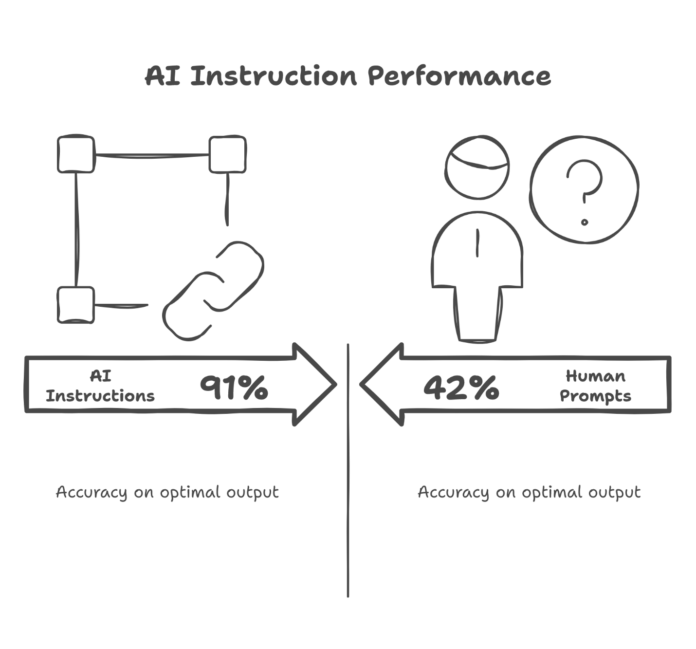
In the rapidly evolving world of artificial intelligence, prompt engineering has become a crucial component of effective human-AI interaction. However, as large language models (LLMs) become increasingly complex, the traditional human-focused approach to prompting is reaching a critical point. What was once a delicate skill of crafting precise instructions is now becoming a bottleneck, causing inefficiencies and subpar results. This article explores the concept of AI-generated intent, arguing that the future of human-AI collaboration hinges not on humans becoming more proficient at crafting prompts, but on AI’s learning to generate and refine their prompts and those of their peers.
I. The Breaking Point: Why Human Prompting is Failing
The inherent limitations of human language and cognitive biases often restrict the full potential of advanced AI models. While early LLMs responded well to carefully crafted human prompts, the growing sophistication of these models, particularly in multi-step reasoning tasks, has exposed the limitations of this approach. The issue isn’t a lack of human ingenuity, but rather the fundamental mismatch between human communication styles and the optimal operational logic of AI.